

Workers’ compensation claims can be costly to an organization, especially if they aren’t managed well. Here are seven (7) tips for employers in managing workers’ compensation claims cost-efficiently and correctly.
The Cost of Employee Turnover
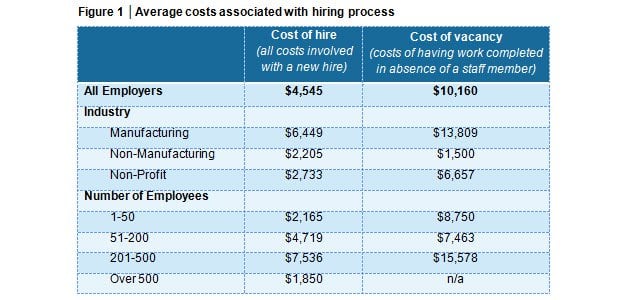
With the economy and the employment situation slowing pulling out of recession in 2013, employers across the country are faced with a different kind of economic challenge, that of employee retention.
Transporting Your Display Materials to a Small Show or Conference

Shipping your display materials to conferences, special events, or small trade shows can be a cost-effective and easy option to get your materials where they need to be. Through FedEx, you can ship your package to a nearby FedEx Office store at no extra cost. There are many FedEx locations around the country – often times right around the corner from, if not in, your hotel or conference center. This way you won’t have to stuff your marketing collateral in your personal suitcase, haul around another set of luggage, or pay for an additional bag. The best part is if you are an enrolled member in the ERC Shipping Program, your FedEx discounts apply to the shipment.
When ADA & FMLA and Workers Comp Intersect

Workers’ compensation laws, the Family Medical Leave Act (FMLA), and Americans with Disabilities Act (ADA) are not mutually exclusive – they all can intersect. According to CareWorks, ERC’s Preferred Partner, one of the most common mistakes employers make is failing to run workers’ compensation and FMLA concurrently.
The 5 New Rules of Employee Engagement

The rules of employee engagement are changing. If engagement is a priority for your organization, here are the five (5) new rules of employee engagement that your organization needs to know.
3 Wellness Program Challenges and How to Fix Them

As wellness programs have become a regular part of “the cost of doing business” (although ideally these programs will eventually yield a net reduction in the cost of doing business over time), it is still somewhat unclear what a “typical” wellness program should (or does) look like.
4 Things to Know About E-Verify

The Immigration Reform and Control Act of 1986 forbids employers from “knowingly hiring illegal workers.” Employers must comply with this law by verifying the eligibility of prospective employees to work in the U.S by gathering information on the I-9 form. One way to do this is by using E-Verify, an electronic way of verifying employment eligibility based on U.S. requirements.
How to Set Compensation in 5 Easy Steps

Salaries are a business investment, and in order to make sure that you set fair and competitive compensation for jobs it’s important to use a structured method for setting compensation as opposed to choosing a random salary or simply using one salary survey or compensation source.
8 Ways to Get the Employee Behavior You Want

Behavior is central to a productive and successful workplace. It affects how we pay people for what they merit, who we promote, and what we recognize and reward. And, ultimately, how our employees behave day to day ends up significantly affecting our culture and business.
10 Employment Laws that Supervisors Need to Know

Supervisors and managers have a shared responsibility with HR in making sure that their interactions and relations with employees are compliant with federal and state employment laws. Here are ten (10) of the most important employment laws that supervisors need to be aware of and the major responsibilities that supervisors typically are responsible for in ensuring compliance.
5 Questions to Evaluate Your Performance Review Process

Performance management is often a challenging area for employers, and many organizations never think they are doing it as effectively as they could be. The truth is that most aren’t. Performance management is a lagging area at many organizations, but nonetheless, it’s a vital process that should be continuously improved upon in the workplace.
Integrating Incentive Pay into Your Performance Management Process

When structuring an effective Performance Management process at any organization, including some type of incentive to help drive performance is a key step. Particularly in recent years, large financial incentives are not always feasible, nor are they always found to be the most impactful driver for incentivizing employees. Nonetheless, a consistently strong majority of organizations both across the region and nationally, tie pay to performance either directly or indirectly.
