
5 Key Types of Executive Compensation

Types of executive compensation

The Highlights:

  • Executive compensation covers the full mix of pay, incentives, and benefits provided to top-level leaders, base salary, short- and long-term incentives, benefits, perquisites, and deferred compensation.
  • The five core types most organizations use today are base pay, short-term incentives, long-term incentives, benefits, and perquisites. Deferred compensation rounds out a sixth, common at larger or publicly held organizations.
  • Plan design varies widely by sector. Manufacturing organizations are far more likely to offer formal variable pay programs than non-manufacturing peers, and long-term incentives are less common across the board than most articles imply.
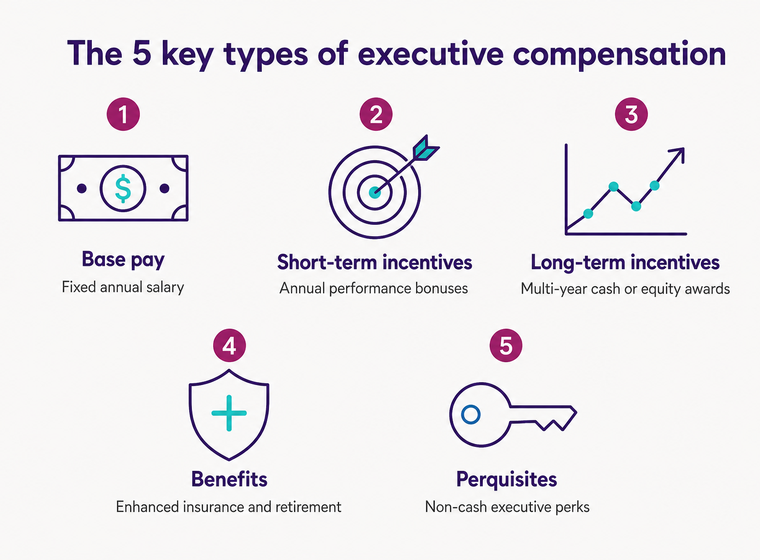
Executive compensation looks complex from the outside, and the structure underneath is usually simpler than the proxy statements suggest. Most plans combine five components, weighted differently depending on what the business needs the executive team to drive. We’ll walk through each one, what it rewards, and where current data from ERC’s 2025 EAA National Executive Compensation Survey suggests the market is moving.

A quick note on what’s not in scope here: severance, change-in-control protections, and the regulatory layer that applies to publicly traded companies. Those matter, but they sit on top of the five components rather than alongside them.

Read more

How to Retain Employees Without Raising Pay

Image of money on a green background

The budget is locked. A high performer is wavering. You can’t get a comp increase approved in time. What do you do? This is the question we hear most often from HR leaders and owners who don’t have a comp budget to flex. The highest-impact retention moves don’t cost money. They cost attention, sequencing, and … Read more

Overpaying for Underperformance: When Compensation Creates Risk Instead of Results

Money charts

What happens when pay rises without a clear link to performance, role growth, or business impact? Organizations start paying more but getting less in return. Payroll costs climb faster than results. Employees remain highly compensated for responsibilities they no longer carry. Raises get approved because they feel easier than addressing performance issues. Over time, compensation … Read more

How to Build a Competitive Compensation Program

Compensation equity, paychecks being held in the air

A competitive compensation program is a pay system that prices each job to the external market, holds up to internal equity, and gives your organization a defensible framework for every pay decision that follows. Done well, it attracts the people you need, keeps the people you have, and stops every offer letter from becoming a … Read more

DIY Compensation Analysis vs. Hiring an Expert: Which Method Is Right for Your Business?

DIY vs. Expert Compensation

When it comes to compensation analysis, you know it’s not as simple as just updating a spreadsheet or comparing job titles. In our experience, figuring out fair pay today almost always demands more than just a DIY approach. We talked with Susan Pyles, a seasoned compensation expert, who explained why many organizations benefit from outsourcing … Read more

How the Best Organizations Approach Compensation

Two compensation experts

You know how challenging it can be to develop a compensation strategy that continuously attracts and retains the talent you need. By learning from the approaches used by top-performing organizations, you’ll find some practical ways to design your pay practices. In this post, we’ll cover the best of the best, including building a clear compensation … Read more

10 Common Compensation Questions HR Teams Ask in 2026

Compensation questions don’t stop coming. From small Northeast Ohio manufacturers to scaling nonprofits, the same patterns surface again and again in what HR teams bring to our Helpdesk: benchmarking sources, review cadence, market shifts, fairness conversations. The list has grown a little longer for 2026. Pay transparency laws are reshaping what employers publish, remote work … Read more

HR in a Pinch: Why Fractional HR May Be Right for Your Organization

Fractional HR Consultant

The Highlights: For small and mid-sized businesses the HR function is a critical part of business operations, but there’s often not a perfect approach to staffing or resource support. Organizations often grapple with the timing of that first full-time HR hire. For those with one or multiple HR team members, employee transitions, employee leave, and … Read more

What is an HR Compliance Audit and Why Do You Need It?

HR Compliance Audit meeting

The Highlights:

  • An HR compliance audit is a thorough review of an organization’s policies, practices, and documentation to ensure compliance with employment laws and regulations
  • An HR compliance audit covers policies, procedures, employee files, benefits, payroll, workplace safety, and legal compliance to identify risks and keep the organization compliant.
  • Organizations need to regularly audit their HR policies and practices to not only to ensure legal compliance, but also to mitigate risks, improve internal processes, and maintain a fair workplace.

HR and business leaders are responsible for ensuring that their organization is aligned with current best practices and compliant with employment laws. Conducting periodic HR compliance audits can protect your company by catching any issues before they become problems or employee complaints.

In plain terms, an HR audit examines your current policies, handbooks, and procedures to check if they measure up to evolving regulations. While compliance may not sound exciting, it’s incredibly important today as laws and best practices frequently change. Doing regular check-ups reduces exposure to risks like lawsuits or fines down the road.

“Regular HR compliance audits are not just about ticking boxes; they’re about identifying opportunities for strategic improvements aligned with real business goals.”

Allison Kenney, Manager of HR Advisory Services

In this article, we’ll review what’s involved in a human resources audit, why it matters, and tips to keep your HR department complaint.

Read more

What is the Difference Between Benefits and Perks?

What’s the Difference between Benefits and Perks?

A study by the U.S. Chamber of Commerce Foundation found that “more than half of millennials (56%) agreed that a quality benefits package influences their choice of employers and 63% say that benefits are an important reason in staying with an employer.”

Read more