

The U.S. District Court for the Western District of Pennsylvania, in the Equal Employment Opportunity Commission’s (EEOC) case against U.S. Steel Corp., ruled that random tests for alcohol can be performed on probationary employees who work in safety sensitive positions, and that doing so does not violate the Americans with Disabilities Act (ADA).
Top 5 Trends in Training & Developing Talent
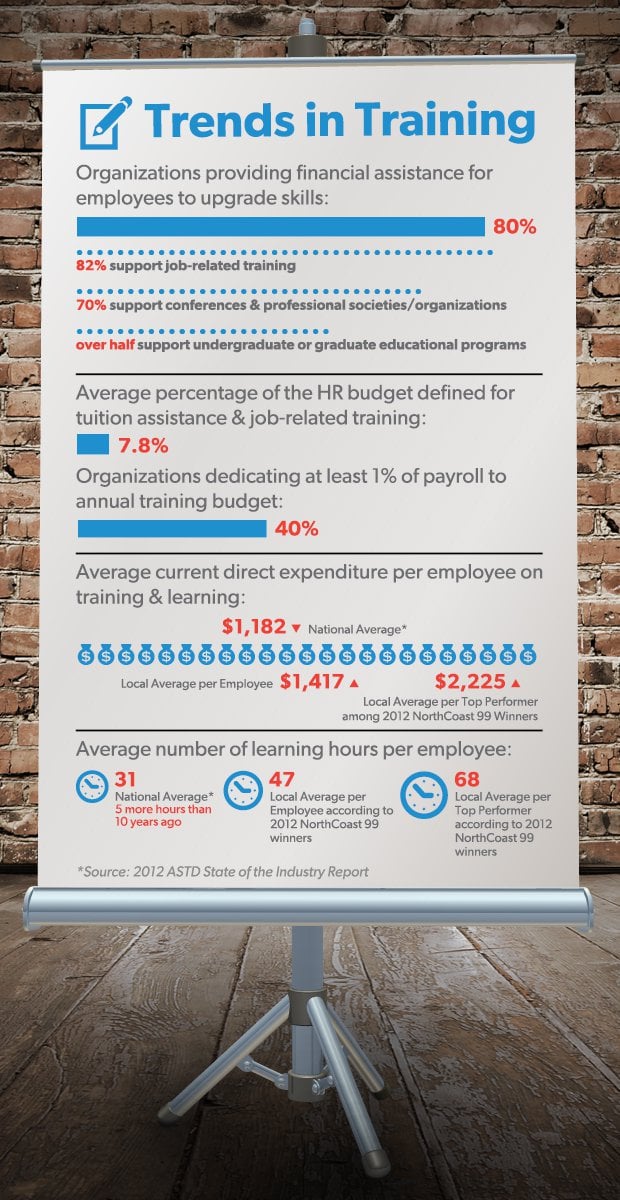
Training and development is a critical aspect of an organization’s talent management strategy. Every organization needs to invest in it to attract and retain talent and grow their employees’ knowledge base and capabilities. Here are five current trends influencing training and development.
Telecommuting: Should You Allow It?

Yahoo’s ban on telecommuting and work-from-home arrangements has sparked an interesting debate in the workplace. Should your organization follow suit?
Free Printable Daylight Savings Time Change Poster – Spring 2013
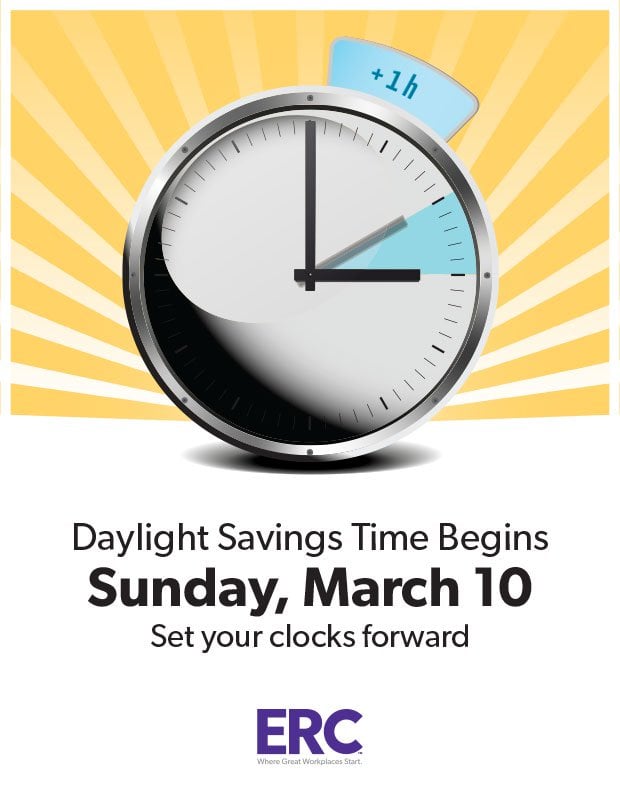
Download this handy printable Daylight Savings Time Change Poster to alert your staff of the impending time change on Sunday March 10, 2013.
How Healthcare Reform Will Affect Your Wellness Program

Healthcare reform is bringing several changes to how employers administer healthcare benefits as well as their wellness programs in 2013. Here are a couple key items you need to know about how healthcare reform affects your wellness program.
5 Proven Ways to Attract Highly Skilled Talent

Finding the best people – the most highly skilled and top performing talent – is usually a challenge for employers, but over the years, in researching how employers land great talent in our NorthCoast 99 program and various survey reports, we’ve learned some “tried and true” ways that they attract the best people.
Executive Pay: The Power of Indirect Incentives

In a PricewaterhouseCoopers study of 1,106 individual executives across 43 countries, researchers found ample evidence to suggest that the effectiveness of executive pay hinges not only on a total dollar amount, but also on several key intangibles. Despite much focus on variable pay as a key element of executive total rewards packages, the PwC study reports that as a performance driver, variable pay is only a part of the story.
Risk Aversion & Executive Pay
In an economy where compensation is increasingly driven by “pay-for-performance” strategies, executive pay is no different. According to the 2012 EAA National Executive Compensation Survey, base salary accounts for approximately 75% of the total compensation package in Northeast Ohio. In theory, by focusing on variable pay, such as bonuses and other short term incentives, organizations are able to more closely tie executive pay to performance. However, a new international report by PricewaterhouseCoopers suggests that for many of the executives surveyed, certain types of variable pay, namely those associated with high levels of uncertainty, may not be an ideal driver of performance.
4 Reasons Your Supervisors Aren’t Effective: Training a New Supervisor

There are many reasons why supervisors can be ineffective, including those that are directly under the control of your organization. Here are 4 of those reasons.
Employee Wellness Programs Flourish in Northeast Ohio

With the start of a new year often comes many health related resolutions and a chance for employees and employers alike to take a fresh look at their wellness both in and out of the workplace. Perhaps most common among these resolutions are those related to weight-loss and exercise, particularly in a workplace more and more focused on relatively sedentary “desk-jobs”. Conventional wisdom would suggest that when it comes to weight management, it is these employees that would struggle most to maintain a healthy, active lifestyle. However, a recent article published in the Plain Dealer, reports that employers may actually need to be more concerned about the wellness of a very different group of employees.
6 Q&As: Managing Flu Season in the Workplace

With flu season in our midst, many employers face challenges in managing sickness in the workplace. These challenges can include managing absenteeism, reducing or managing the prevalence of sickness in the workplace, supporting employees who must care for sick children, and in more rare cases, dealing with longer-term medical issues. Here is a Q&A guide on some of your most frequently asked questions related to these topics.
$20 Million in Training Grant Dollars Available to Ohio Companies
Update (1/10/13): As of January 10, 2013 over 400 applications have been submitted for the Ohio Incumbent Workforce Training Voucher Program. According to the Ohio Development Services Agency (formerly Ohio Department of Development), many more companies have begun applications. The Ohio Development Services Agency is still encouraging companies to apply for funding.
