

The end of the year is a great time to review existing documents, systems and HR administrative practices. Here is a 3 step HR guide for year-end.
10-Step Company Holiday Party Planning Checklist

Most companies have a holiday party for their employees each year. In our 2012 ERC Holiday Practices Survey, nearly three-quarters (73%) of 186 Northeast Ohio organizations surveyed are planning a holiday party for 2012 and the majority (66%) are budgeting the same or more than in 2011.
3 Guidelines When Terminating an Employee

Unfortunately, some employees don’t work out – their behavior or poor performance escalates and they eventually need to be terminated. Many organizations have questions about properly carrying out terminations, including what to do to address the problem, when it’s appropriate to terminate an employee, and how they facilitate the termination itself. Here are 3 guidelines when terminating an employee.
Communicating in Times of Crisis: HR’s Role

On behalf of everyone at ERC, our thoughts are with all those affected both nationally and locally by 2012’s Hurricane Sandy.
Free Training Planning Worksheet
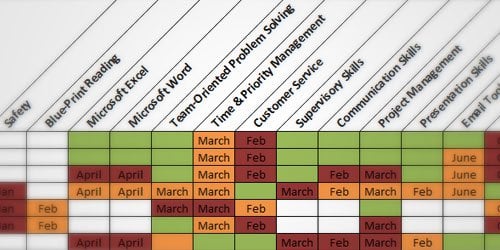
Planning and organizing employee training for an entire year can be a challenge. That’s why we’re providing you with a simple worksheet to help you chart and organize the types of training classes that will be offered in a given year, the individuals who will attend those classes, their perceived skill level, and the timing of when they will attend training throughout the year.
Non-Profits Offering Paid-Time-Off Banks
According to the 2012 ERC Non-Profit Benefits Survey, the non-profit sector in Northeast Ohio appears to be a bit ahead of the curve in terms structuring the paid time off offered to employees. The more flexible, all inclusive, “paid-time-off” or “PTO” banks are being used by 45% of the non-profit respondents, while other ERC surveys from earlier in 2012 have reported numbers closer to 30% or even lower. Although there is some variability in the samples from year to year, the Non-Profit Benefits survey shows a clear trend with the use of PTO banks hovering just under the 50% mark from 2009-2012.
A Step-by-Step Guide to On-Boarding New-Hires

Many organizations struggle to on-board and engage new employees effectively which poses challenges in setting them up for success in their new roles. As a result, we’ve compiled a step-by-step guide to help you successfully on-board and engage your new-hires.
3 Reasons You’re Losing Employees Because of Pay
In this article, we explore three current and critical compensation problems that cause employers to lose talented employees. These issues include low salary increases, lack of differentiation in pay by performance, and difficulties finding the actual “going rate” for jobs.
Book Review: The Three Signs of a Miserable Job
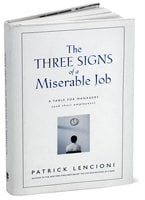
In “The Three Signs of a Miserable Job,” author Patrick Lencioni writes a fable about a retired CEO who strives to understand what causes misery at work.
4 Hiring Practices Successful Employers Use

Ever wonder how employers select a perfect match for a job? In our research, their secret lies in using certain hiring methods to select the right employees, specifically these four practices.
How to Inspire & Engage Employees in 6 Easy Ways
Do you want your employees to work harder? Have a better attitude? Be more productive? Find efficiencies or areas to improve? Show more enthusiasm? Be committed?
What is ADA?
The Americans with Disabilities Act (ADA), enacted in 1990 and amended in 2008, prohibits private employers with 15 or more employees, state and local governments, employment agencies, and labor unions from discriminating against qualified individuals with disabilities in employment activities. Such activities include hiring, termination, training, promotion, compensation, and other terms and conditions of employment.
