
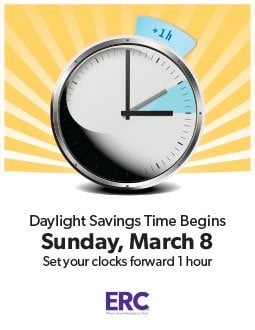
Download this free printable Daylight Savings Time Change Poster to alert your staff of the impending time change on Sunday, March 8, 2015.
Training Your Interns: An Investment in Your Company’s Future

Providing employees with opportunities for training and development is typically framed in terms of a long term investment by the employer. You, the employer, invest time and resources into developing an employee’s skill set and in turn they become a more valuable contributor. Ideally, this employee feels appreciated and valued enough to stick around and make your investment worthwhile.
The State of Childcare Reimbursement in the U.S.

The Bureau of Labor reports that in 2015 there are more than 30 million working mothers and fathers with children in the US. In 2014, 13% of state and local government industries had access to workplace-funded childcare. Only 10% of private industries had access to such funding.
Why Having a Compensation Strategy is a Must

How much should you pay your employees? Why should you have a compensation strategy? And when was the last time you reviewed your strategy?
Free Community College: What’s all the Buzz?

The average American is carrying around $27,000 in student-load debt in 2015. American’s are either not going to school for the first time or not furthering their education because they can’t afford it or don’t want the debt.
Should You Be Performing Facebook Background Checks?

When it comes to recruiting potential employees, social media has become a popular resource for finding candidates that will fit the required job skills and become a top-performing employee. But is using information from social media profiles a legal and reliable part of the recruiting process?
Pay Period Leap Year: Handling 27 Pay Periods

If the question of, “How will you handle 27 pay periods,” doesn’t sound familiar to you, don’t panic. It may not apply to your organization, or if it does, you still have options.
2015 Vacation Planner (Free Download)
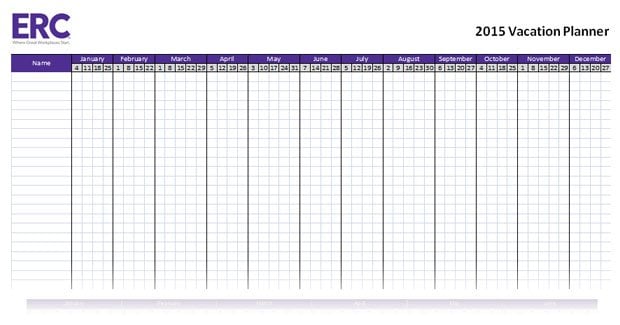
Vacation planners make employers vacation request and approval process a lot easier and more efficient. We’ve put together a free Vacation Planner for 2015 that you can download below.
Free Printable Daylight Savings Time Change Poster – Fall 2014
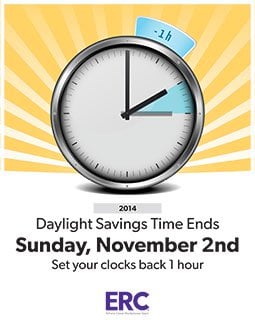
Download this handy printable Daylight Savings Time Change Poster for Fall 2014 to alert your staff of the impending time change on Sunday, November 2, 2014.
An Introduction to Benchmarking and Performance Reviews

In today’s team and collaborative environment, having a performance review with employees is a great communication and evaluation tool. A survey conducted by SHRM in fall of 2012 shows that 74% of companies perform reviews annually, while 21% conduct reviews semi-annually. A small percentage does them quarterly or ongoing.
3 Technology and Social Media Policies To Consider

Many technologies aim to make our lives better and make our work lives more efficient. These same technologies create unique situations within the workplace that could reduce productivity and cause security and privacy concerns. Having effective policies related to technology and social media etiquette for employees are essential to creating a culture of understanding around these situations. Here are a few policies to consider:
Challenges of an Aging Workforce: The Non-Profit Perspective

Recently, much attention is being paid on a global scale to the negative impact that an aging, or in some countries even “super-aged,” population will have on the global economy in the near future.
