
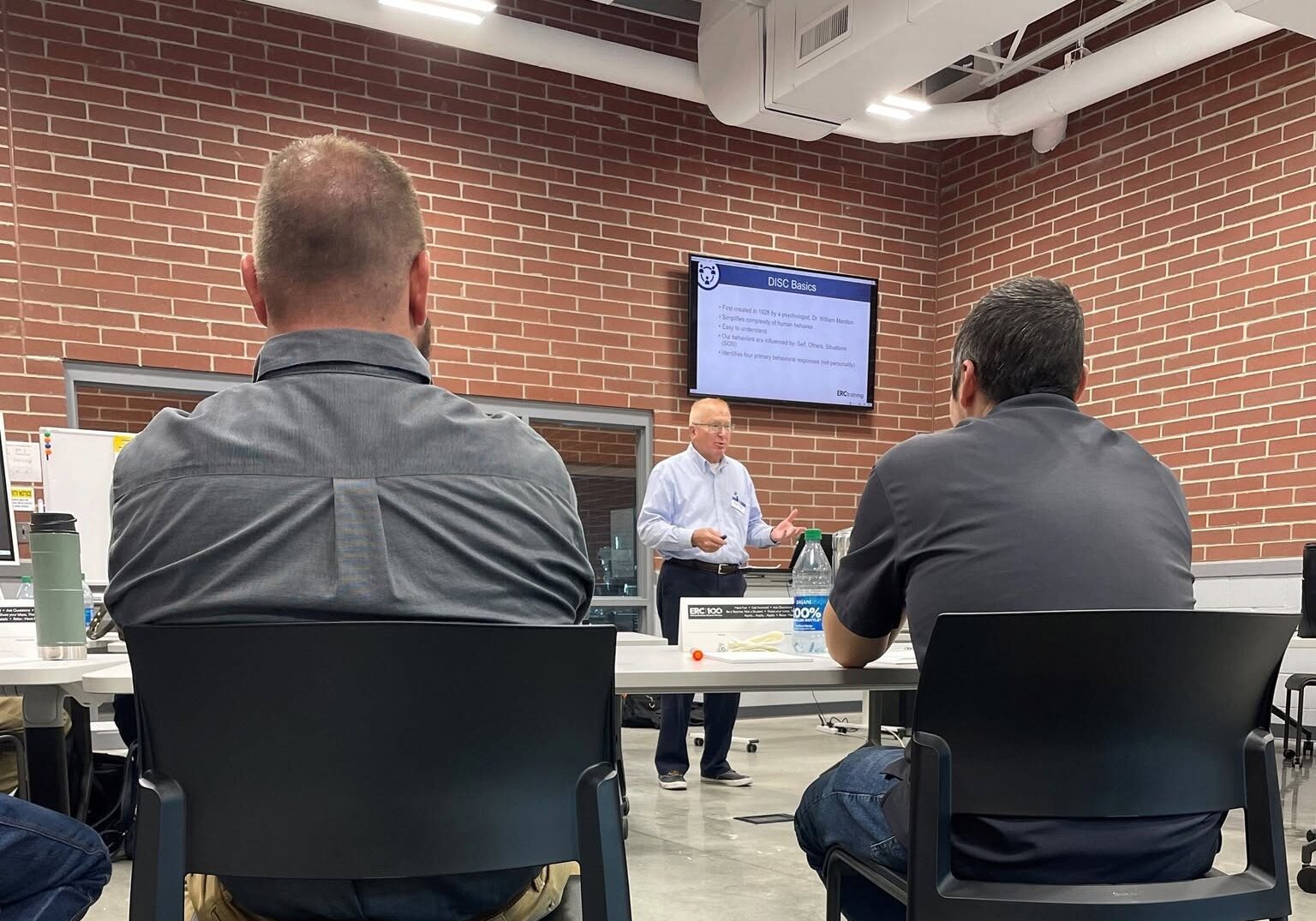

Your crew leaders, program supervisors, and department heads were promoted for doing the work well. We train them to lead the people who do it.
Live, customized supervisor training for cities, counties, townships, utilities, and other public employers nationwide. Sessions cover setting expectations, documenting consistently, handling hard conversations, and keeping good employees when pay follows a schedule.
Sound Familiar?
The core supervisory skills are the same in every workplace. Public service changes the conditions supervisors use them in, so we build each program’s scenarios and practice around the situations your supervisors handle.
The friendships came with the promotion. Setting a standard for former peers is the first hard thing a new supervisor does, and most do it without help.
Nothing was written down in between, so HR has little to work with. Progressive discipline and probationary decisions run on what a supervisor documented, and when.
Employees notice. So does the union steward. When a decision gets challenged, the first question is usually how other supervisors handled the same thing.
The supervisor still controls recognition, development, flexibility where policy allows, and how people get treated day to day.
The veteran has watched three directors come and go. The new hire is deciding whether to stay.
Posting, testing, and approvals take time. Until the seat is filled, the team gets whatever attention is left over.
Supervisors have to keep people steady through decisions they didn’t make and can’t always explain in full.
A sharp message, or a conversation handled badly at the front counter, can end up in front of the council or in the local paper.
Most new supervisors learn what to handle, what to document, and when to call HR or labor relations by getting one of those calls wrong. Practicing them in a session costs a lot less.
Supervisor & Manager Training Curriculum
The curriculum covers the challenges supervisors raise most often, for newly promoted supervisors and for people who have been in the role for years without formal training. We customize every module before delivery, so your supervisors practice situations from your own departments. Modules include:
- Understand what changes when you go from doing the work to leading the people who do it
- Set a shared standard for what good supervision looks like across departments
- Apply clear criteria to expectations for service quality, safety, attendance, and workload
- Build trust with the team and raise issues to department leadership at the right time
- Communicate openly with a team that has watched leaders come and go
- Use active listening with employees, other departments, and the public
- Recognize Wiley DiSC® styles and adjust your approach across generations and tenure
- Explain decisions clearly, including ones that came from elected officials or the administration
- Recognize common sources of conflict in public workplaces, from overtime and assignments to handoffs between departments
- Prepare for and open a difficult conversation using the five Thomas-Kilmann Conflict Mode Instrument (TKI) modes
- Address issues early to head off formal complaints and grievances
- Have direct conversations with former peers while keeping the working relationship intact
- Use a repeatable way to set expectations, follow up, document performance, and recognize strong work
- Know what to handle, what to document, and when to bring in HR or labor relations
- Write documentation that is factual, specific, and timely, so it holds up when someone else reads it later
- Use the probationary period well, with clear expectations and honest feedback before it ends
- Understand the supervisor’s role in employment-related compliance
- Recognize when key employment laws may be involved and when to take the question to HR
- Apply tools for building and maintaining effective documentation
- Prevent unlawful and unprofessional behavior, including discrimination, harassment, and bullying
- Understand what motivates each person on the team, from the new hire to the employee nearing retirement
- Learn why public employees stay and why they leave
- Build recognition and development habits that keep people when pay follows a schedule
- Capture what long-tenured employees know before they retire
- Set priorities when requests come from residents, other departments, and leadership at once
- Weigh urgency against importance when the team is short-staffed
- Run effective staff meetings, crew briefings, and shift handoffs
- Keep leading the team while covering a vacancy
- Define the characteristics of high-performing teams in public service
- Recognize the behaviors of a cohesive team and the leader who builds one
- Build consensus when a team has to fix a recurring service problem
- Coach, delegate, and build capability across the team
- Understand change roles during new systems, reorganizations, and leadership transitions
- Identify what you control when a decision comes from council, the board, or the administration
- Lead the team through a change they didn’t choose with clarity and steadiness
- Recognize how long-tenured employees and new hires respond to change
- Understand the barriers to accountability, including supervising the people you came up with
- Set clear expectations, address missed ones, and hold everyone to the same standard
- Build ownership across the team for the services residents depend on
- Recognize and reinforce the behaviors that keep the team on track
- Recognize common approaches to problem solving and where supervisors jump to a fix too fast
- Apply a standard model that works inside your policies and approval process
- See how supervisor decisions affect overtime, service levels, budgets, and turnover
- Create an action plan and make concrete recommendations to department leadership
- Set professionalism expectations for people who represent a public organization
- Tell the joking that builds a team from the joking that creates a complaint
- Connect a supervisor’s credibility to the standards their team follows
- Apply respect standards to emails, messages, and interactions with the public
Flexible supervisor training that fits public schedules and budgets
Public services run on fixed office hours, around-the-clock shifts, and budget years. We schedule around your operations and your fiscal calendar. We often recommend 90-minute sessions, which keep supervisors close to their teams and the public.
Choose the program structure

A custom program built around your priorities, from a new class of supervisors to a reset on consistency across departments

Individual courses on specific topics, such as discipline and documentation or leading across generations
Choose the length and cadence

Half-day or full-day sessions or 45, 60, or 90-minute training bursts

Weekly, monthly, multi-day, or custom schedule
Choose the delivery format

Virtual

In-Person at your location

In-Person at ERC

Blended approach
Loop Learning™ Model
Our Loop Learning™ Model makes training stick by helping participants understand themselves, learn practical skills, practice in realistic situations, and then apply it on the job. Our approach leads to real behavior change, not just a good training session.
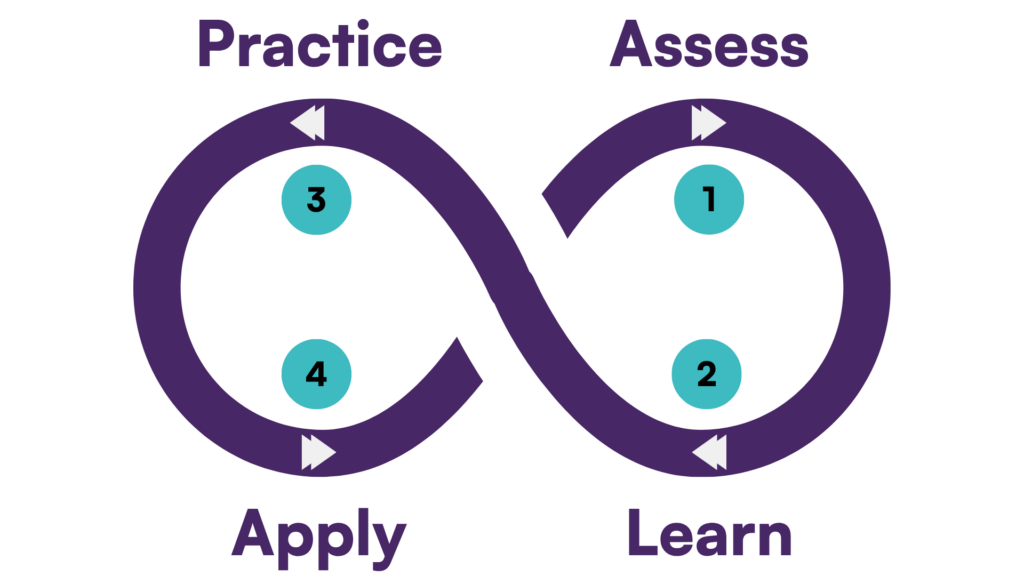
1
Assess: Participants learn their own style, strengths, and blind spots, including how their communication lands with different personalities on the crew.
2
Learn: Participants gain behaviors, skills, and tools they can use immediately.
3
Practice: Participants work through scenarios, role-plays, and peer discussion from your floor, leaning on practice and application with limited lecture.
4
Apply: Participants take the tools back to the job with a plan for the conversation they’ve been avoiding.
Leadership Application Lab
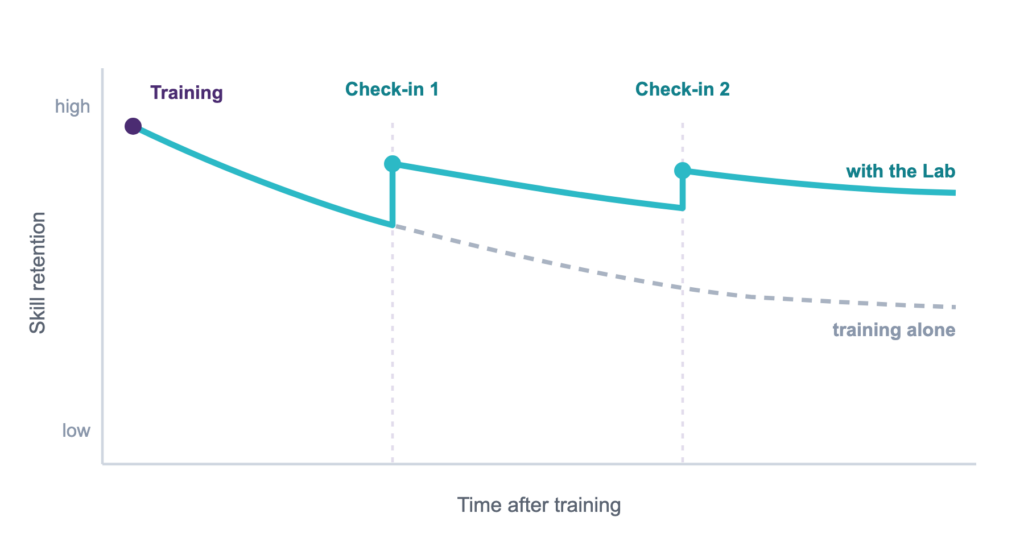
You can extend the program with Leadership Application Labs. Supervisors bring back situations they’ve run into since the last session, talk through what worked and what got tricky, and practice with the trainer. The group turns the content into day-to-day habits before they’re on their own with it.
Why Leadership Application Lab?
Most participants can’t retain everything they’ve learned during training. Without reinforcement, skill retention can drift during or after a session.
Research suggests that about 70% of development happens on the job, 20% from coaching and mentoring, and 10% from structured training.
The Application Lab is designed for the way that people actually learn. Spaced check-ins reinforce the skills right when your people are putting it to work, so more of it sticks.
Led by Experienced Trainers
Your supervisors learn from trainers who have managed teams and handled the day-to-day friction that comes with the job. We match the facilitator to the group, so a room of public works crew leaders and a room of county program managers each get a trainer who fits.

Tom Ault

Chris Powers

Nada Djordevich

Damon Lindor
Who Should Attend ERC’s Supervisor Training?

Newly promoted supervisors
Help them make the move from peer to supervisor with the team’s respect and their own confidence intact, ideally during their probationary period.

Supervisors who never had formal training
Many have gotten by for years on instinct. A shared set of tools raises every department.

Crew leaders and foremen in public works, utilities, and parks
Working supervisors who still do the job while leading others need the sharpest priority-setting and delegation skills.
Preview Our Supervisor and Manager Training

See an ERC trainer in action
Watch a video of a real trainer instructing a training course.

Download a sample workbook
Preview a participant workbook and see examples of lessons and activities.

Access training program outline
See full training program details and share with your team.
Free Course Preview
See a real ERC trainer in action, download a sample workbook, and access the full training program outline.
Testimonial
“Truly the outcome far exceeded the expectations… the participants were blown away at how practical and immediately applicable the training was.”
– Jerry Gilin, DRB
Frequently Asked Questions
The skills are the core supervisory skills every leader needs. The customization makes it public sector training. Before delivery, we work with you to build the scenarios, examples, and language around your organization. Your supervisors practice the situations they handle: the former peer who now reports to them, documentation that’s three months behind, the long-tenured employee who has outlasted four directors.
Yes. We train supervisors to hold the standard consistently, document clearly, address issues early, and bring in HR or labor relations at the right time. Those skills matter even more in a represented or civil service workplace. We build the sessions around your policies and process. For contract interpretation and legal questions, work with your labor relations staff or counsel. Our trainers will tell you plainly when something belongs there.
Yes, and it often helps. When public works, finance, and parks supervisors learn the same expectations and practice together, handoffs between departments get smoother. For departments that run around the clock, such as a utility or a dispatch center, we can run a separate cohort scheduled around its shifts.
It depends on how many topics you choose and how you want them delivered. A common starting point is a set of modules in 90-minute sessions spaced about two weeks apart. Pricing is per session, so it scales with the number of sessions and cohorts. We can start with a smaller piece that fits this year’s budget and build from there.
Customized content built around your organization, structured participant workbooks that people write in and keep, and participant evaluations. Leadership Application Labs add follow-up sessions after the core program.
Get Pricing or More Information
Get pricing for ERC’s Supervisory Training. Have questions? Speak with a training expert to learn more.
