

Health care supervisors often get promoted for their clinical skills, but most are handed the leadership part with no training behind it.
ERC provides training on the people side of leading a unit or a department: setting expectations, handling conflict, holding standards, and keeping good staff. Every program is live, customized to your organization, and led by trainers who have managed people.
Supervisor & Manager Training Curriculum
Our curriculum addresses the challenges frontline healthcare leaders face most often. It works for onboarding a cohort of new charge nurses and for supervisors who have held the role for years without formal training. Modules can be customized so participants practice on situations relevant to them.
- Understand what changes when you go from caring for patients to leading the people who do
- Identify the traps that catch new clinical leaders, starting with taking the hardest assignment yourself
- Apply clear criteria to expectation setting on a unit or in a department
- Establish regular interaction with each team member and demonstrate trust-building behaviors
- Recognize the impact of open and honest communication on team trust and patient experience
- Engage in active listening, including during handoff and in short hallway conversations
- Identify Wiley DiSC® social styles and behavioral tendencies across a multigenerational clinical team
- Apply strategies to strengthen relationships with staff, physicians, and other departments
- Recall the most common causes of conflict on a unit, from assignments and scheduling to break coverage
- Identify the five Thomas-Kilmann Conflict Mode Instrument (TKI) conflict handling modes
- Formulate strategies to address friction between shifts, departments, and disciplines
- Apply tools for challenging situations, including naming incivility toward a new nurse in the moment
- Define the performance management partnership between supervisor, employee, and HR
- Implement an easy-to-remember process for effective performance evaluation
- Apply a standardized model when documenting attendance, professionalism, and follow-through concerns
- Confidently hold timely conversations with direct reports before a pattern becomes a separation
- Understand the supervisor’s role and responsibilities in employment-related legal compliance
- Recognize when key employment laws are compromised and what action is required
- Apply tools for building and maintaining effective documentation
- Prevent unlawful and unprofessional workplace behavior, including discrimination, harassment, and bullying
- Identify the unique motivators and strengths of each person on the team
- Demonstrate listening with purpose, including with staff who are running on empty
- Understand why clinical and support talent stays and why it leaves, including the first-year exits that cost the most
- Apply engagement and retention strategies a frontline leader can use without a budget
- Identify accountabilities across the shift and the department
- Examine priorities and implement time management techniques for leaders who still carry an assignment
- Develop an effective structure for huddles, handoffs, and staff meetings
- Apply criteria to test the urgency and importance of requests coming from every direction at once
- Define the characteristics of high-performing clinical and support teams
- Recognize the behaviors of a cohesive team and the leader who builds one
- Apply consensus-building practices when the team has to solve a recurring workflow problem
- Assess the team’s stage of development when the roster includes travelers, per diem, and new grads
- Understand change management roles and responsibilities during system rollouts, unit moves, and policy shifts
- Identify their sphere of control and influence when the decision came from above them
- Demonstrate how to lead a team through a change they didn’t choose and may not like
- Differentiate between change style preferences and recognize emotional responses to change on a tired unit
- Understand what it means to take ownership of the shift and the outcomes on it
- Identify common barriers to accountability, including the pull to stay friends with the team you just joined as a leader
- Implement strategies for holding people accountable the same way every shift
- Apply a standardized model for recognizing and rewarding the behavior you want repeated
- Recognize common approaches to problem solving and where leaders jump to a fix too fast
- Demonstrate improved problem-solving and decision-making under time and staffing pressure
- Apply a standardized model that complements the quality improvement tools your organization already uses
- Create an action plan and evaluate results
- Identify professionalism expectations that hold up in a high-stress care environment
- Differentiate between the humor that bonds a unit and the humor that creates a complaint
- Recognize the link between a leader’s personal credibility and the standards their team follows
- Apply respect standards to common situations, including how staff speak to each other in front of patients
Flexible Supervisor Training That Fits Your Team
Getting clinical leaders into a room is the hardest part of healthcare training, so we build the schedule around your staffing. Most healthcare organizations run 90-minute or half-day sessions because it fits a shift overlap or a scheduled education day.
Choose the program structure

Custom program built around your priorities

Individual course(s) on specific topics
Choose the length and cadence

Half-day or full-day sessions or 45, 60, or 90-minute training bursts

Weekly, monthly, multi-day, or custom schedule
Choose the delivery format

Virtual

In-Person at your location

In-Person at ERC

Blended approach
Loop Learning™ Model
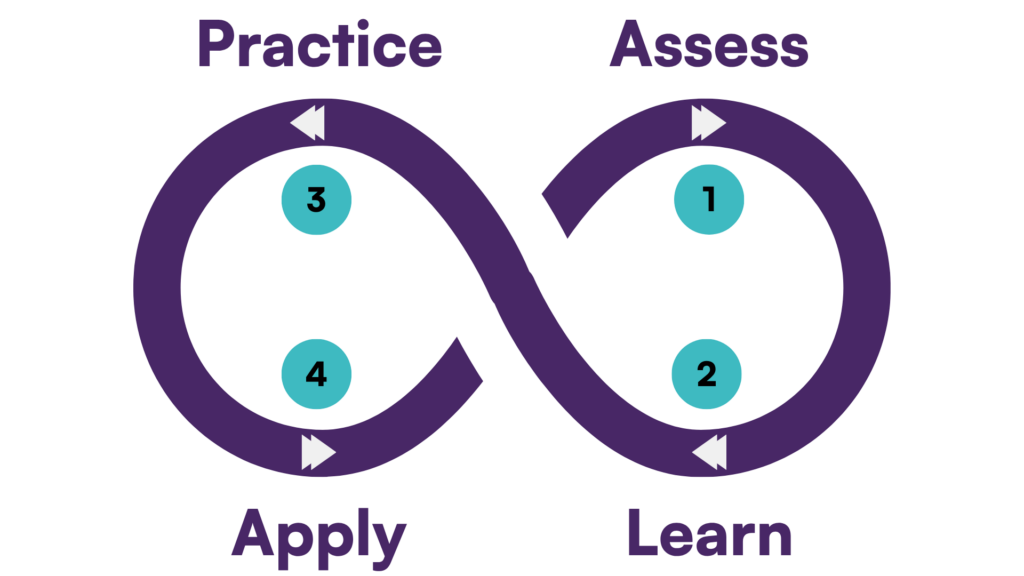
Our Loop Learning™ Model makes training stick by helping participants understand themselves, learn practical skills, practice in realistic situations, and then apply it on the job. Our approach leads to real behavior change, not just a good training session.
1
Assess: Participants learn their unique style, strengths, and areas for improvement.
2
Learn: Participants gain behaviors, skills, and tools that can be applied in real workplace situations.
3
Practice: Participants apply new skills through realistic scenarios, role-playing, and peer discussions.
4
Apply: Participants apply what they’ve learned on the job.
Leadership Application Lab
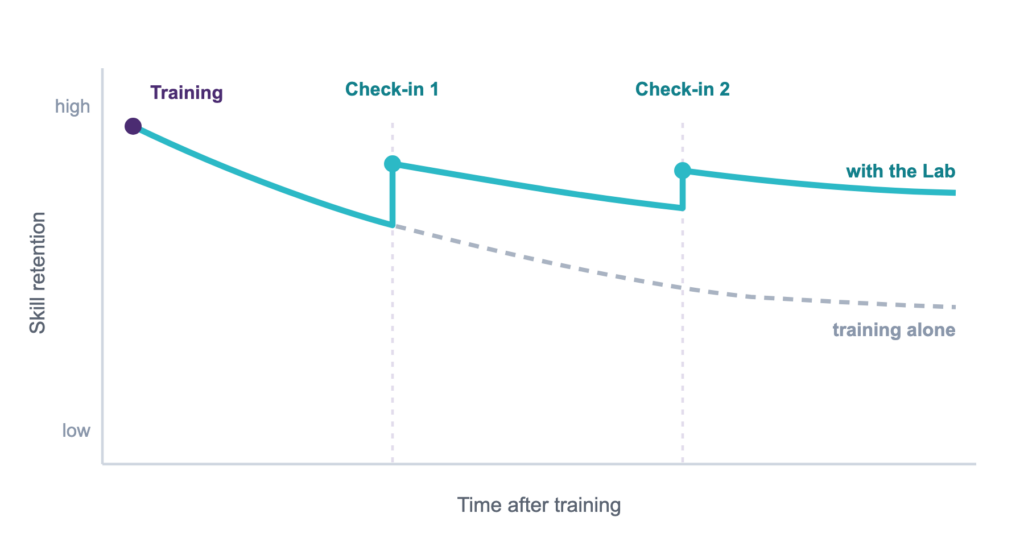
The Leadership Application Lab is an optional addition to training that helps participants practice and retain the skills they’re building during training. Participants meet with their ERC trainer and bring the situations they’re facing right now. Every session works on their live problems, so the skills from training get used while they’re still fresh.
Why Leadership Application Lab?
Most participants can’t retain everything they’ve learned during training. Without reinforcement, skill retention can drift during or after a session.
Research suggests that about 70% of development happens on the job, 20% from coaching and mentoring, and 10% from structured training.
The Application Lab is designed for the way that people actually learn. Spaced check-ins reinforce the skills right when your people are putting it to work, so more of it sticks.
Led by Experienced Trainers
Your leaders learn from people who have been in the seat: managing teams, running projects, and handling the friction that comes with the job. Our trainers use relatable stories, plain language, and a collaborative style.

Tom Ault

Chris Powers

Nada Djordevich

Damon Lindor
Who Should Attend ERC’s Supervisor Training?

Charge nurses and clinical supervisors
Help them make the move from peer to supervisor and hold standards while still carrying their assignments.

Nurse managers and unit leaders who never got formal training
Many have been leading on instinct for years. A shared set of tools raises the whole department.

Practice managers and clinic supervisors
Small teams, constant patient contact, and lack of training make these leaders susceptible to issues.
Preview Our Supervisor and Manager Training

See an ERC trainer in action
Watch a video of a real trainer instructing a training course.

Download a sample workbook
Preview a participant workbook and see examples of lessons and activities.

Access training program outline
See full training program details and share with your team.
Free Course Preview
See a real ERC trainer in action, download a sample workbook, and access the full training program outline.
Testimonial
“Truly the outcome far exceeded the expectations… the participants were blown away at how practical and immediately applicable the training was.”
– Jerry Gilin, DRB
Frequently Asked Questions
The skills are the core supervisory skills every leader needs. The customization is what makes it healthcare training. Before delivery, we work with you to build the scenarios, examples, and language around your organization, so participants practice on situations from your units and departments: the handoff that keeps going badly, the nurse who is short with new grads, the family member escalating at the desk.
No. This program covers the people side of leading: communication, accountability, performance conversations, conflict, engagement, and retention. Clinical competencies, HIPAA and privacy training, patient safety and quality certification, and accreditation readiness stay with your clinical education team and your accrediting partners. Our clients typically run both tracks in parallel.
We repeat sessions so day, evening, and night leaders get the same content without leaving a unit short. A common pattern is running the same 90-minute module twice on the same day around a shift overlap, then covering nights separately or virtually. For multi-site systems, virtual delivery gets leaders from different facilities into the same room, which is often where the best peer learning happens.
Yes, and mixing them is often a good idea. Environmental services, dietary, patient access, revenue cycle, and lab supervisors face the same people challenges as clinical leaders, and training them together tends to improve how those departments work with each other. We adjust the scenarios so everyone in the room sees their own job in the examples.
It depends on how many topics you choose and how you want them delivered. Most healthcare clients start with a set of modules in 90-minute sessions spread over several weeks or months. Pricing scales with the number of sessions, the group size, and whether we deliver on site or virtually. Tell us your group size and the topics you care about and we’ll give you a number.
Get Pricing or More Information
Get pricing for ERC’s Supervisory Training. Have questions? Speak with a training expert to learn more.
