

Most manufacturing supervisors got the job because they were the best operator on the floor, and almost none were taught to lead the people side of the work alongside the technical side.
We train supervisors on everyday skills they use to lead their teams: setting clear expectations, handling hard conversations, and keeping good people. You end up with one standard for what good supervision looks like across every shift.
Sound Familiar?
The core supervisory skills are the same in any industry. The conditions your supervisors apply them in are specific to manufacturing, and that’s where generic management training fails. If any of these sound like your floor, they’re what we can build the training around:
Running the machine wins every time, and the crew goes another day without direction.
You’re behind on a customer order, so it waits, and waits, until it’s a write-up instead of a correction.
Being the strongest hand on the floor says nothing about leading the people side of the work alongside the technical side.
Each supervisor learned the job from whoever had it before them, so the standard drifts and the handoff turns into one shift blaming the next.
Add operators who would rather take direction in Spanish, and the way that supervisor communicates has to work across all of it.
The first weeks and months on the floor are where an operator decides whether to stay, and the supervisor drives most of that experience.
Points, PTO, overtime, and phones are where the crew works out which rules hold, and letting small things slide teaches them which standards are optional, including the safety ones.
Neither knows where the line sits on what to handle, what to document, and when to bring HR in.
Staffing, overtime, and labor hour calls get made every shift by people nobody has shown how those calls move cost, throughput, scrap, rework, quality, and turnover.
Supervisor & Manager Training Curriculum
Our curriculum addresses the challenges supervisors face most often. It works for onboarding a group of newly promoted team leads and for developing supervisors who have been in the role without formal training. Training can be customized, so the scenarios your team practices come from your floor.
- Understand what changes going from running the machine to running the crew
- Set a shared standard for what good supervision looks like in your plant
- Apply clear criteria to expectation setting for quality, safety, attendance, and output
- Build trust and steady interaction with the team, and raise issues to leadership at the right time
- Lead start-of-shift conversations that set the tone for the day
- Engage in the active listening process, including on a loud floor where conversations are short
- Recognize Wiley DiSC® styles and flex your approach across a crew at very different points in tenure
- Communicate direction clearly and check for understanding with operators, maintenance, quality, and other shifts
- Recognize the most common sources of conflict in a production environment, from overtime distribution to shift handoffs
- Prepare for and open a difficult conversation using the five Thomas-Kilmann Conflict Mode Instrument (TKI) modes
- Address issues earlier and reduce avoidable escalation between cells, shifts, and departments
- Have direct conversations, including with people they used to work alongside, while keeping the relationship intact
- Use a repeatable way to set expectations, follow up, document performance, and recognize strong work
- Know what to handle, what to document, and when HR should be involved
- Apply a standardized model when documenting quality misses, attendance issues, and safety violations
- Hold timely, direct performance conversations before a small issue becomes a termination
- Understand the supervisor’s role and responsibilities in employment-related legal compliance
- Recognize when key employment laws are compromised and what action is required
- Apply tools for building and maintaining effective documentation
- Prevent unlawful and unprofessional workplace behavior, including discrimination, harassment, and horseplay that crosses the line
- Understand what motivates each member of the crew
- Understand why skilled trades and production employees stay and why they leave
- Build the everyday recognition and engagement habits that keep people on the line
- Support new employees through their first weeks and months so they stay and grow
- Set and communicate priorities across the shift
- Weigh urgency against importance as requests come in from scheduling, quality, and maintenance
- Develop an effective structure for shift start-ups, tier meetings, and handoffs
- Lead the work instead of being pulled into it while still carrying production responsibility
- Define the characteristics of high-performance production teams
- Recognize the behaviors of a cohesive crew and the leader who builds one
- Apply consensus-building when the team has to solve a recurring quality or throughput problem
- Coach, delegate, and build team capability
- Understand change roles and responsibilities during equipment installs, layout changes, and process rollouts
- Identify their sphere of control when a decision comes down from corporate
- Lead the crew through a change they didn’t choose with clarity, steadiness, and ownership
- Recognize change style preferences and emotional responses to change on a long-tenured floor
- Understand the barriers to accountability, including the pull to stay friends with the crew you just left
- Set clear expectations, address the missed ones, and hold the standard shift after shift
- Build ownership across the crew for the standards that keep the floor running
- Recognize and reinforce the behaviors that keep the team on track
- Recognize common approaches to problem solving and where supervisors jump to a fix too fast
- Apply a standardized model that complements the lean and continuous improvement tools your plant already uses
- See how supervisor decisions affect cost, throughput, overtime, scrap, rework, quality, and turnover
- Create an action plan, evaluate results, and make concrete recommendations to leadership
- Identify professionalism expectations that hold up in a plant
- Differentiate between the joking that builds a crew and the joking that creates a complaint
- Recognize the link between a supervisor’s credibility and the standards their team follows
- Apply respect standards to common situations, including how supervisors speak during a bad run
Flexible Supervisor Training That Fits Your Team
Pulling supervisors off the floor is the hardest part of manufacturing training, so timing flexes around your production schedule, staffing, and priorities. Most of our manufacturing clients run 90-minute sessions, a format that keeps the work focused and hands-on without pulling supervisors off the floor for long.
Choose the program structure

A custom program built around your priorities, whether that’s a new class of leads or a floor-wide reset on accountability

Individual course(s) on specific topics
Choose the length and cadence

Half-day or full-day sessions or 45, 60, or 90-minute training bursts

Weekly, monthly, multi-day, or custom schedule
Choose the delivery format

Virtual

In-Person at your location

In-Person at ERC

Blended approach
Loop Learning™ Model
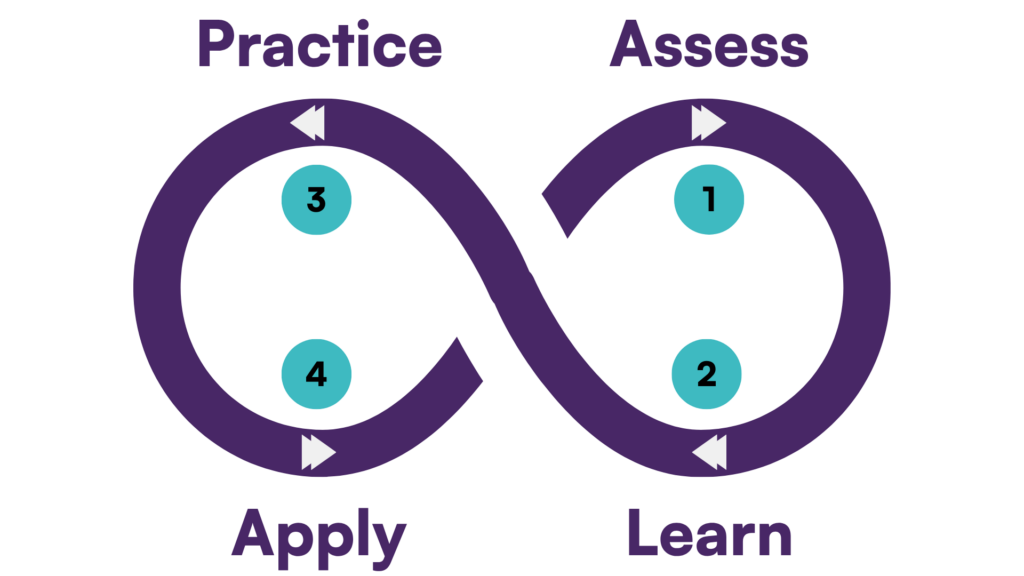
Our Loop Learning™ Model makes training stick by helping participants understand themselves, learn practical skills, practice in realistic situations, and then apply it on the job. Our approach leads to real behavior change, not just a good training session.
1
Assess: Participants learn their own style, strengths, and blind spots, including how their communication lands with different personalities on the crew.
2
Learn: Participants gain behaviors, skills, and tools they can use immediately.
3
Practice: Participants work through scenarios, role-plays, and peer discussion from your floor, leaning on practice and application with limited lecture.
4
Apply: Participants take the tools back to the job with a plan for the conversation they’ve been avoiding.
Leadership Application Lab
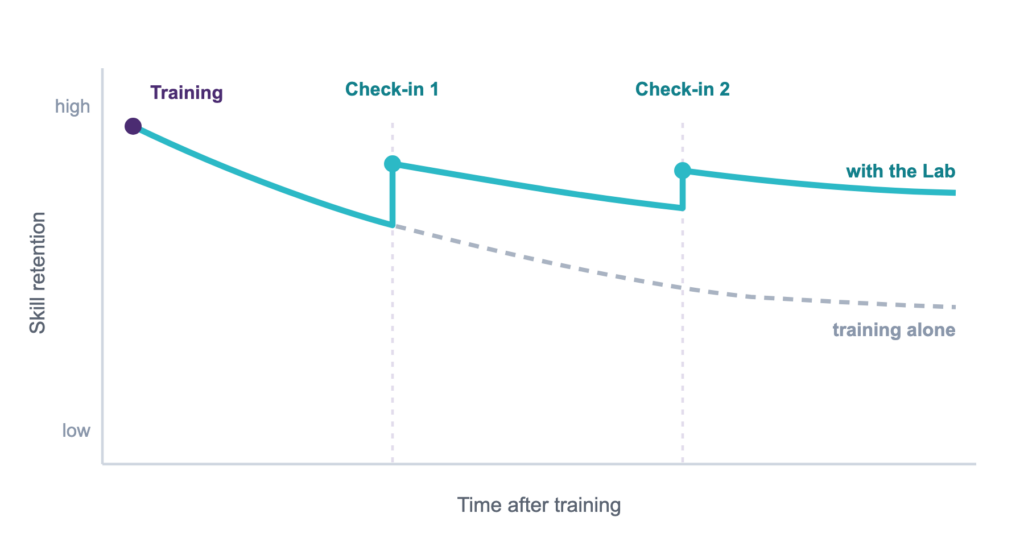
The Leadership Application Lab is an optional addition to training that helps participants practice and retain the skills they’re building during training. Participants meet with their ERC trainer and bring the situations they’re facing right now. Every session works on their live problems, so the skills from training get used while they’re still fresh.
Why Leadership Application Lab?
Most participants can’t retain everything they’ve learned during training. Without reinforcement, skill retention can drift during or after a session.
Research suggests that about 70% of development happens on the job, 20% from coaching and mentoring, and 10% from structured training.
The Application Lab is designed for the way that people actually learn. Spaced check-ins reinforce the skills right when your people are putting it to work, so more of it sticks.
Led by Experienced Trainers
Your supervisors learn from people who have been in the seat: managing teams, running projects, and handling the day-to-day friction that comes with the job. Our trainers draw on decades of experience and use relatable stories, plain language, and a collaborative style that works even with skeptical supervisors.

Tom Ault

Chris Powers

Nada Djordevich

Damon Lindor
Who Should Attend ERC’s Supervisor Training?

Newly promoted team leads and shift supervisors
Help them make the move from peer to supervisor without losing the crew’s respect or their own confidence.

Supervisors who have been in their role but never received formal training
Many have been getting by for years on instinct. Giving them a repeatable set of tools raises the whole floor.

Maintenance, quality, warehouse, and shipping supervisors
The same skills apply, and training them alongside production supervisors improves the handoffs between them.
Preview Our Supervisor and Manager Training

See an ERC trainer in action
Watch a video of a real trainer instructing a training course.

Download a sample workbook
Preview a participant workbook and see examples of lessons and activities.

Access training program outline
See full training program details and share with your team.
Free Course Preview
See a real ERC trainer in action, download a sample workbook, and access the full training program outline.
Testimonial
“Truly the outcome far exceeded the expectations… the participants were blown away at how practical and immediately applicable the training was.”
– Jerry Gilin, DRB
Frequently Asked Questions
The skills are the core supervisory skills every leader needs. The customization is what makes it manufacturing training. Before delivery, we work with you to build the scenarios, examples, and language around your operation, so the sessions stay grounded in the situations your supervisors manage day to day in a production environment: the handoff argument, the attendance pattern, the veteran operator who ignores the new lead. Our trainers have worked with manufacturers across Northeast Ohio and adjust the room accordingly.
We run the series in cohorts so each shift gets the same content without leaving the floor short. A common pattern is two cohorts, one for first shift and one combining second and third where scheduling allows, which keeps the cost down. Where that doesn’t fit, we run three, one per shift.
Yes. We deliver in person nationwide and virtually, and multi-site manufacturers often run the same program across locations so every plant’s supervisors work from the same standard. Virtual delivery works well when you want supervisors from different sites learning from each other.
It depends on how many topics you choose and how you want them delivered. Most manufacturing clients start with a set of modules delivered in 90-minute sessions over several weeks or months. Pricing scales with the number of sessions, the group size, and whether we deliver on site or virtually. Tell us your group size and the topics you care about and we’ll give you a number.
Customized content built around your organization, structured participant workbooks that people write in and keep, and participant evaluations. If you add Leadership Application Labs, you also get ongoing sessions after the core program.
Get Pricing or More Information
Get pricing for ERC’s Supervisory Training. Have questions? Speak with a training expert to learn more.
