
Leadership & High-Potential Coaching
We build each coaching engagement around one leader and their unique situation. We measure where they are at the start and again at the end of a coaching engagement so you and the leader can both see how far they’ve come.
When Leadership & High-Potential Coaching is the Right Fit

A leader stepping into a bigger role
You promoted someone, and now their direct reports are managers too. The technical skills that earned the promotion still matter, but the new role requires more of them on the people side.
Outcomes:
Leaders set clear expectations and accountability for the managers who report to them and, in turn, their teams.

A senior leader who needs a sounding board
The higher someone goes, the fewer people there are to share ideas with. An ERC coach brings an outside perspective with no stake in the outcome and holds the leader to what they said they’d do.
Outcomes:
Leaders make decisions with more confidence and follow through on their development goals.

A high-potential employee you’re preparing for a senior role
You’ve identified someone who could become your next director, VP, or successor for a key role. Coaching builds the skills they’ll need in that role. It also tells them you’re planning a future for them at your organization.
Outcomes:
High-potential employees see how others experience their leadership style, work from a shared development plan with their manager, and are prepared when the role opens.

A leader pulled into the day-to-day
Some leaders are so good at the work that it keeps pulling them back in. Coaching helps them set priorities, delegate more to their team, and focus on the decisions only they can make.
Outcomes:
Leaders delegate with confidence and spend more of their time on strategic planning and priorities.
What Leadership Coaching Can Focus On
We set each leader’s focus areas and goals at the start. Common ones include:
Leading other leaders: setting a clear standard for managers and holding them to it.
Communicating across styles: adapting how they lead to reach each person on the team.
Delegation: handing work to the team and stepping out of the day-to-day.
Accountability and performance: setting clear expectations and following through on them.
Conflict and hard conversations: handling pushback while keeping working relationships strong.
Decisions tied to business results: connecting decisions on staffing, cost, and scheduling to the numbers leadership cares about.
Leading change: guiding a team through a reorganization or a period of growth.
Succession readiness: preparing a high-potential employee for the role they’ll eventually fill.
How Leadership & High-Potential Coaching Works

1
We agree on what success looks like
We meet with the leader and the leader’s manager to set the goals for the engagement.

2
We set a baseline
The leader rates themselves on a set of leadership skills, and their manager rates them on the same list to set a baseline.
3
We coach one-on-one
Sessions last 60 minutes and happen every two to four weeks, which gives the leader time to try each skill before the next conversation. Every session ends with a short action plan.

4
We measure again
The leader and their manager repeat the baseline ratings. Our team turns the results into a report. We walk you through growth, strengths, and continued opportunities.
Leadership Application Lab (Optional)
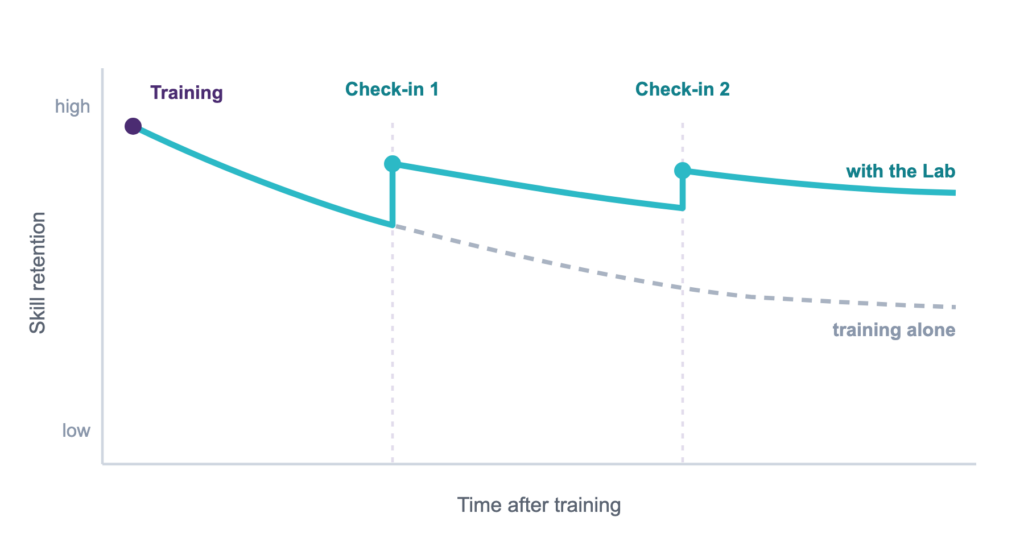
Beyond coaching sessions, Leadership Application Labs give leaders a standing hour with their coach to work through current challenges and develop new skills. We recommend one about every two months.
Why Leadership Application Lab?
Research suggests that about 70% of development happens on the job, 20% from coaching and mentoring, and 10% from structured training.
The Application Lab is designed for the way that people actually learn. Spaced check-ins reinforce the skills right when your people are putting it to work, so more of it sticks.
Tom Ault, Senior Solutions Consultant & Trainer
Tom specializes in developing and coaching leaders at all levels and helping organizations strengthen communication, navigate change, develop talent, and improve performance. His areas of focus also include organizational and employee development, and employee engagement.
Tom has an Executive Master of Business Administration (EMBA) degree from Baldwin-Wallace University as well as a Bachelor of Science in Accounting at West Liberty State College. He also carries nearly a dozen certifications, including:
- Master Trainer
- Myers–Briggs Type Indicator® (MBTI®): Step I™ & Step II™
- DiSC® Facilitation
- The Leadership Circle Profile™360
- TRACOM’s PRO Social Style®, Behavioral EQ®, Adaptive Mindset for Resiliency®, and Adaptive Mindset for Agility®

Get Pricing or More Information
Get pricing for ERC’s Leadership & High-Potential Coaching. Have questions? Speak with a coaching expert to learn more.
Frequently Asked Questions
Most engagements include 6 to 8 sessions over several months. The leader and coach schedule directly with each other, so the cadence can move around busy calendars.
Coaching sessions are $450 each. Most core engagements start at about $4,500, which covers 6 to 8 sessions, a DiSC assessment, and the before-and-after measurement with a report and debrief. Leadership Application Labs are $450 each. We can scale an engagement up or down to fit your budget.
Both. Many engagements start with an in-person kickoff and continue virtually.
What the leader shares in coaching sessions stays between them and their coach, so they can speak openly. Your organization sees how the leader is progressing toward the goals you set together, from the baseline to the final results.
